Tango as a social dance
How a milonga works: tandas and cortinas
How a Buenos Aires milonga is organised, what a tanda and a cortina are, how dancers invite each other and why a show is a different evening.
Reserve your seats ↗Quick answer
A milonga is an event where Argentine tango is danced. The music comes in tandas, sets of three or four songs, separated by short cortinas that clear the floor. Dancers invite each other with a look, called the cabeceo, and move counterclockwise around the floor in a ronda. A show, by contrast, is something you watch.
A milonga is an evening, not a dance
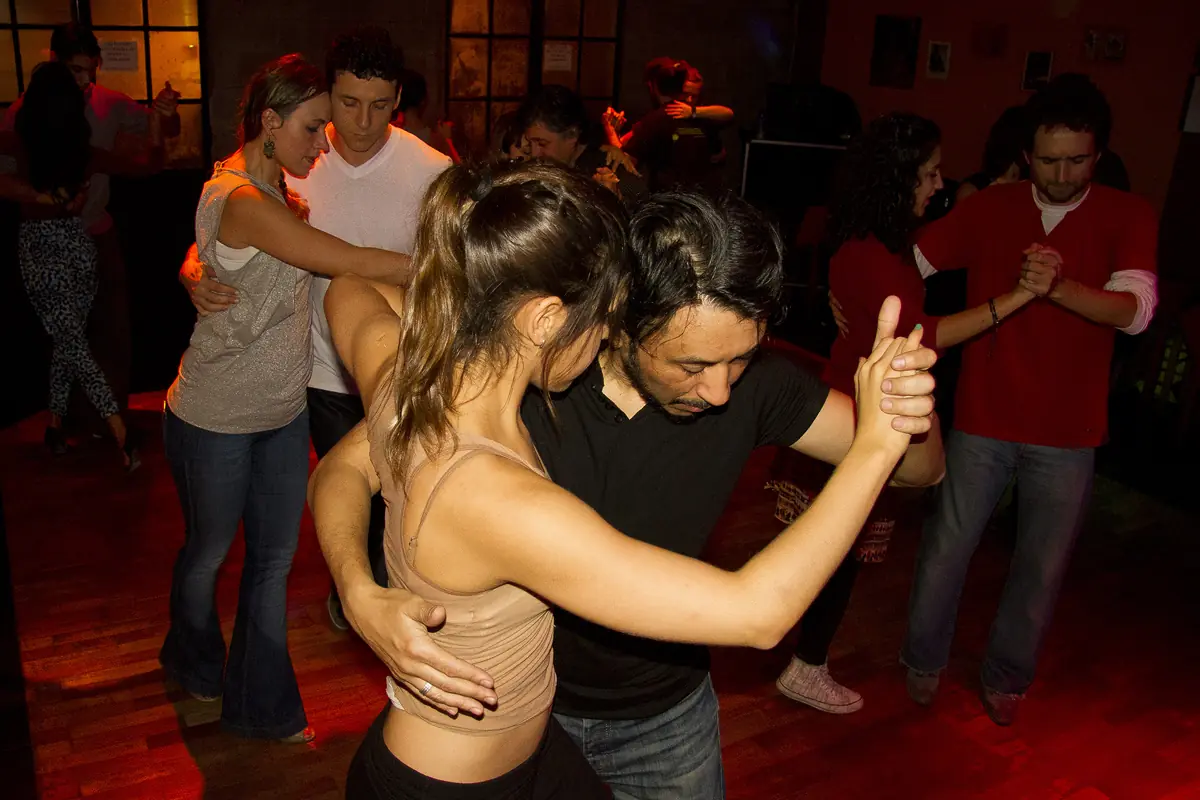
The word milonga names a dance and a musical style, and also the social event where Argentine tango is danced. Regular attendees are called milongueros, and many milongas are held weekly. The city's tourism site says they can be held anywhere with a space to dance, from elegant halls to cosy bars and neighbourhood community centres, and some feature live orchestra sets.
Tandas
The music at a milonga is organised in tandas, sets of consecutive songs. Milonga and vals tandas have three songs, and tango tandas have three or four, usually in a consistent style from one orchestra and singer. Once partners accept a dance, they stay together for the whole tanda. Leaving early is reserved for injury or serious misconduct. The core repertoire is traditional tango of the 1930s to the 1950s.
What the DJ plays
The core repertoire is traditional tango from the 1930s to the 1950s, the golden age, with modern reinterpretations sometimes mixed in. Outside Buenos Aires, non-tango music is less common, and events that play other music usually announce it in advance. Otherwise the DJ is expected to play mostly classical tango. Each tango tanda usually keeps to one orchestra and singer, so a set has a recognisable style from first song to last.
Cortinas
Between tandas, the DJ plays a cortina, a short non-dance piece that clears the floor and lets partners change. Because the music at most modern milongas is recorded, with an orchestra occasionally playing live for part of the event, the DJ shapes the evening, and cortinas give the room a moment to breathe.
Mirada and cabeceo
Nobody is obliged to accept a dance. Verbal invitations are discouraged, and dancers use the mirada, an open and noncommittal gaze, and the cabeceo, a nonverbal invitation. A nod accepts, and looking away declines. The system lets people decline without embarrassment. If you only plan to watch, you can sit back and see it happen across the room.
The ronda and floor etiquette
Couples circle counterclockwise in a ronda. The rules are about sharing the space: don't enter the floor mid-tanda except to dance, don't rush or slow others, and avoid large moves that could endanger anyone. Courtesy matters: avoid talking while you dance, escort your partner back to their seat after the tanda, and apologise for any collision. These conventions keep a crowded floor moving as one.
Lessons first, then the floor
The city's tourism site notes that many milonga venues host classes before the dancing begins, and that four or five classes can be enough to learn a basic sequence and join the floor. It says the most formal milongas encourage smart dress and the observance of traditional codes, while modern ones often have a relaxed, bohemian vibe. If you want to dance, start with a class at a venue that offers one.
Festivals and milonga weeks
The Buenos Aires International Tango Festival and World Cup takes place every August, with free shows, classes, milongas and an international contest for stage and salon dancers. The city has also run a week of milongas, with open classes, live orchestras and shows across its neighbourhoods. Both are a good moment to see how many forms tango takes, from the stage to the floor, in a short space of time.
How a show differs
A show is built for an audience: professional dancers and musicians perform, and you watch. A small-room show such as Secreto Tango gives you the closeness of a milonga without needing the steps, the codes or a partner. If you have time for both, see a show first to hear and see how the music moves a body, then try a milonga to see how people dance it among themselves.
Read next: Small tango show or dinner hall?
Frequently asked questions
What is a tanda?
A set of consecutive songs. Milonga and vals tandas have three songs; tango tandas have three or four.
What is a cortina?
A short non-dance piece played between tandas to clear the floor and let partners change.
What is the cabeceo?
A nonverbal invitation to dance. A nod accepts; looking away declines.
Sources